
Physical therapy practice management software should be judged on how well it supports the plan of care, not on its feature list. Test it on documentation and progress-report timing, timed-minute and unit calculation, therapy threshold tracking, visit counts, billing handoff, certification status, data export and security before you sign.
A demo shows scheduling screens and note templates. It rarely shows the tenth treatment day, three timed services that add up to an odd number of minutes, or a clinic asking for its records back. This guide is for PT owners and managers shortlisting a system. It names no products; the general category is in the practice management software guide. The rules cited are Medicare rules; commercial plans and other contractors can differ.
Key takeaways
- Choose a system that follows one episode of care, from evaluation to discharge.
- Medicare asks for a progress report at least once every 10 treatment days; the software should count them.
- It should total minutes across timed codes before converting to units.
- The 2026 KX threshold is $2,480 for PT and SLP combined; ask how it is tracked.
- ASTP/ONC certification is voluntary and general; test PT workflows and export yourself.
What should physical therapy practice management software cover?
It should cover everything that happens in one patient episode: referral, evaluation, plan of care, each visit, the claim and discharge. In PT these pieces depend on each other. A visit note feeds the units on the claim, and the plan of care sets how many visits the schedule should allow.
Vendors sell a physical therapy EHR, a practice management system or one package that does both. Compare jobs, not labels: the EHR side holds the evaluation, plan of care, notes and outcome scores; the practice management side holds the schedule, insurance, charges and claims.
| Area | What to ask | Basis |
|---|---|---|
| Plan of care | Are plan elements, signatures and certification dates stored as fields, with due-date alerts? | CMS MLN; Noridian |
| Progress reports | Does it count treatment days and store outcome scores as data? | Noridian; ASHA |
| Timed minutes | Does it total minutes across timed codes before units? | CMS manual, chapter 5 |
| Thresholds, modifiers | Does it track KX and apply CQ or CO? | CMS therapy page |
| Scheduling | Does it show visits used against the plan and payer limits? | ASHA; payer rules |
| Billing handoff | Do signed notes produce complete charges? | RCM Finder framework |
| Certification, export | Is it on the certified list; can staff export a record alone? | ASTP/ONC |
| Security | BAA, unique logins, audit trail, logoff, return of data | HHS; 45 CFR 164.312 |
Source: CMS; Noridian Medicare; ASHA; HHS; ASTP/ONC; RCM Finder framework.
What documentation should the software enforce?
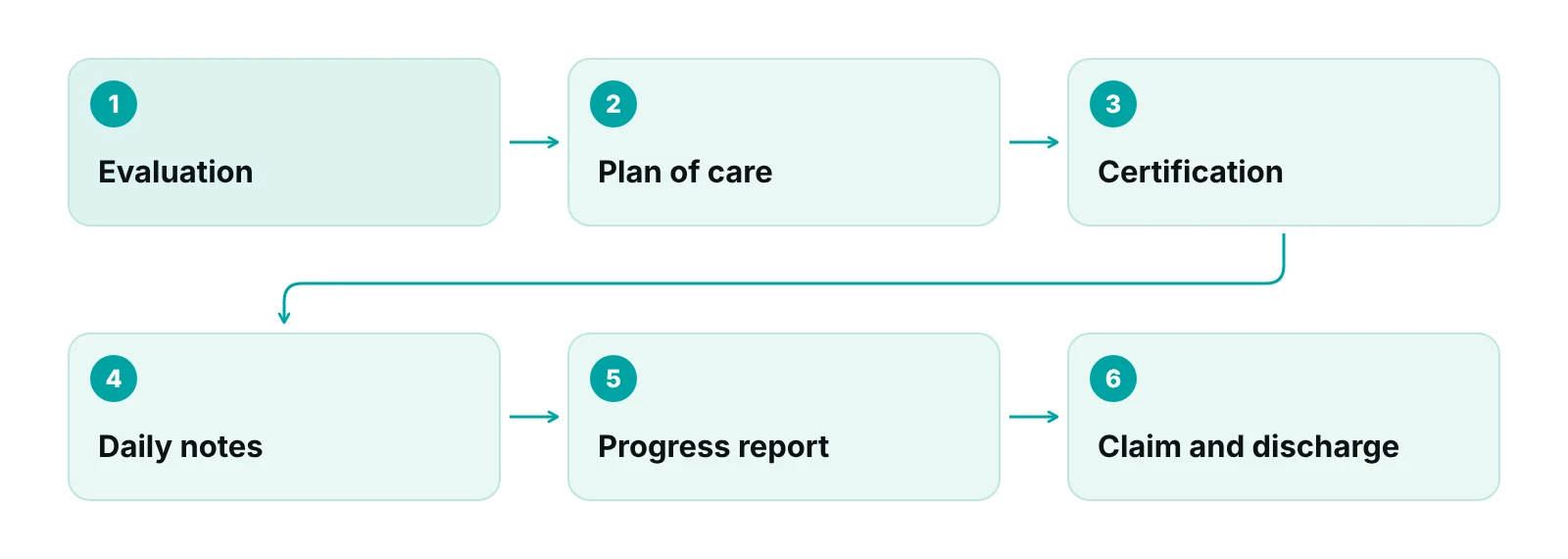
It should make the Medicare sequence hard to skip: evaluation, a plan of care with the required elements, timely certification, a note for every treatment day and a progress report at least once every 10 treatment days.
The CMS outpatient therapy booklet (April 2019) says a plan of care needs diagnoses, long-term goals, type of service, and amount, frequency and duration, signed and dated, and that the physician or practitioner certifies it within 30 days of the first treatment day (CMS MLN905365). Noridian, the Jurisdiction F contractor, reported in a page updated January 15, 2026 that a review of 247 outpatient therapy claims from October 1 to December 31, 2025 found a 32.87% error rate, led by medical necessity and documentation. It adds that notes written by an assistant are not complete progress reports (Noridian). Other contractors may differ.
- Plan fields for diagnosis, goals, type, amount, frequency and duration that the schedule and claim can read.
- Signature and date capture, with alerts when certification or recertification is due.
- A treatment-day counter that flags the progress report and routes it to the therapist.
- A daily note for every treatment day, and a discharge note that works like a progress report.
The daily-note and discharge points come from an ASHA summary of Medicare Benefit Policy Manual chapter 15, a secondary page, so check the manual before building templates.
Outcome measures
Store outcome measures as dated, structured scores, not narrative text. The ASHA summary says progress reports should show objective evidence and that standardized instruments are recommended, not required. Structured scores let the system trend change, tie it to a goal and pull it into the report. Noridian says unskilled maintenance therapy is not covered, so ask how templates avoid printing identical wording for every visit.
How should the software handle the 8-minute rule, units and thresholds?
It should record minutes per timed service, total them, convert the total to units and show the result. Under the Medicare Claims Processing Manual, when more than one 15-minute timed code is billed in a day, the total minutes determine the timed units (CMS, chapter 5, section 20.2).
| Units | Total timed minutes |
|---|---|
| 1 | 8 through 22 |
| 2 | 23 through 37 |
| 3 | 38 through 52 |
| 4 | 53 through 67 |
| 5 | 68 through 82 |
| 6 | 83 through 97 |
Source: CMS, Medicare Claims Processing Manual, chapter 5, section 20.2 (the pattern continues for longer visits).
Two timed services of 10 minutes each total 20 minutes, which is one unit, not two. The manual also says not to bill a single service under 8 minutes. Which service receives the unit is a coding decision for your biller (see the guide to evaluation and treatment codes), and other payers may count differently. The CMS booklet says to document total minutes under timed codes each day, so make minutes a required field.
Therapy threshold and assistant modifiers
For calendar year 2026 the KX threshold is $2,480 for PT and speech-language pathology combined, and $2,480 for occupational therapy (CMS transmittal R13437CP). CMS keeps a $3,000 targeted medical review threshold for PT and SLP combined (CMS). Adding KX attests that services are medically necessary and documented. Because the total is combined, a clinic’s ledger may not show it all: ask how the system gets the accumulated amount, whether it warns first, and when the vendor loaded the 2026 figure.
The CQ modifier marks PT furnished in whole or in part by an assistant, pairs with GP, and since January 1, 2022 is paid at 85 percent of the usual amount (CMS). The system should set it from the treating provider type.
How should scheduling, visit counts and home exercise programs work?
The schedule should know the plan of care. ASHA’s summary defines amount as times per day, frequency as times per week and duration as weeks or sessions (ASHA). If the system stores those fields, the front desk can see visits used against visits planned.
- Visits used, visits remaining and plan end date on the booking screen.
- A flag when a visit falls outside the certification window or is the tenth treatment day since the last progress report.
- Payer visit limits tracked apart from the plan; payers set their own.
- Cancellations and no-shows that do not count as treatment days.
Keep home exercise programs in the chart with the version and date. If a portal, app or booking page delivers them, check privacy: HHS says tracking tools on login and scheduling pages can expose PHI and a tracking vendor receiving PHI needs a BAA (HHS). A June 2024 court order vacated part of that bulletin, so check the current position.
For virtual visits see the physical therapy telehealth guide. For online booking pages see the physical therapy SEO guide and the marketing plan.
What should the billing handoff look like?
The signed note should produce a complete charge, and a person or team must still work the denials. Check that the system links codes, units, modifiers and diagnoses; flags missing minutes or certification before a claim is built; posts remittances; and gives each denial a reason and an owner. Decide who owns those steps before go-live. The physical therapy billing services guide covers outsourcing, and the guide to growing a physical therapy practice covers the volume billing must absorb.
What does ASTP/ONC certification mean for a physical therapy EHR?
It is a voluntary testing program for health IT developers. It does not certify HIPAA compliance or test PT workflows such as progress-report timers. ASTP/ONC says it authorizes testing labs and certification bodies instead of testing products, and that the Certified Health IT Product List, updated at least weekly, is where to verify a claim (ASTP/ONC overview). Ask whether your exact product and version is listed, and which criteria it covers.
Whether your clinic needs certified technology depends on the programs it joins, so confirm that before certification drives the purchase.
The export criterion helps buyers
A certified product that stores electronic health information must meet 45 CFR 170.315(b)(10): single-patient export on demand without developer help, a population export, and a documented format (ASTP/ONC). The developer deadline was December 31, 2023 (ASTP/ONC guide). It binds developers, not clinics, so treat it as a question to ask.
What should you ask about data export and migration?
Ask for a sample export of a test patient before signing. HHS says the BAA must require return or destruction of data at termination where feasible, and the service agreement must not block access to your data (HHS). That is a floor, not a format. Also ask for open plans of care with dates, visits used, structured outcome scores, notes, home exercise history and claim history. Avoid cutting over mid-certification period.
How should security and hosting be compared?
Compare who holds the data and who can see it, and write the answers into the BAA. HHS says a cloud provider holding patient data for a covered entity is a business associate even if the data is encrypted, and that HIPAA does not require it to share security documentation, so ask in the contract (HHS).
Under the Security Rule, unique user identification and emergency access are required; automatic logoff and encryption are addressable (45 CFR 164.312). HHS risk analysis guidance covers all systems holding patient information (HHS). HHS proposed stronger rules on December 27, 2024, including multi-factor authentication, but its page showed no final rule when I read it (HHS). See the HIPAA compliance checklist.
How do you test a physical therapy system in a demo?
Run tasks from your own week and watch the system do the arithmetic.
| Task | What a pass looks like | Basis |
|---|---|---|
| Create an evaluation and plan of care | Plan fields and certification due date are stored | CMS MLN |
| Chart nine visits, then book the tenth | Progress report flagged to the therapist | Noridian |
| Treat with timed services of 12, 10 and 9 minutes | 31 minutes total, 2 units, minutes saved per code | CMS chapter 5 |
| Have an assistant treat part of the visit | CQ added with GP | CMS therapy page |
| Move a patient near the 2026 threshold | Warning before $2,480; KX needs documentation | CMS R13437CP |
| Remove a user, open the audit log | Access ends; log shows who opened which record | 45 CFR 164.312 |
| Export a test patient | File delivered without vendor help | ASTP/ONC |
Source: CMS; Noridian Medicare; HHS; ASTP/ONC; RCM Finder framework.
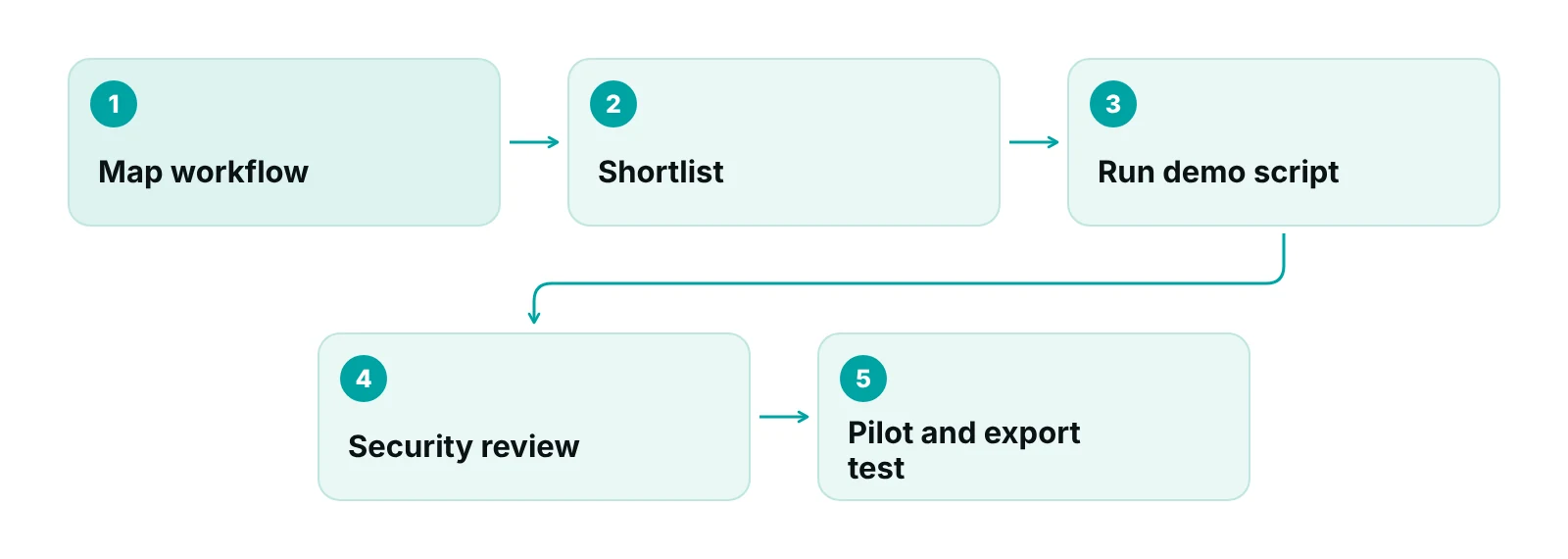
Have a front-desk employee and a therapist run it, not only the sales representative.
Where does a claims portal fit alongside physical therapy software?
A claims portal complements a physical therapy EHR; it does not replace the clinical record. The RCM Finder practice management system sits on the claims side: it tracks claims by stage, checks claim data before submission, flags underpayments, runs workflow rules, and controls access with roles and an audit log. Billing companies get a client portal per practice. Appointment booking is in early access and in-portal eligibility checks are coming next. We put a Business Associate Agreement in place before accessing patient data.
Our team works inside your existing EHR (for example PrognoCIS, eClinicalWorks or athenahealth), and our virtual medical assistants handle eligibility checks and intake in your time zone.
See where claims stall today
A free practice audit reviews claims, remittances and denials and shows which problems need software and which need a process change.
Our recommendations
- Map one episode before any demo. Write how a patient moves from referral to discharge and judge each feature against it.
- Test progress-report timing. Chart nine visits and see whether the system warns before the tenth treatment day.
- Make the vendor show the units math. Use a three-service visit and check that total minutes set the units.
- Ask how KX is tracked and updated. The amount changes yearly, so ask when new figures load and how the combined total is found.
- Verify certification and export. Look up the exact version on the official list and export one test patient.
- Name a denial owner before go-live. Assign charge review and claim follow-up so the backlog does not simply move.
Bottom line
The right physical therapy practice management software passes your own tasks: documentation that follows the plan of care, units that add up, tracked thresholds, data that can leave and controlled access. Test with the table and demo script, then decide who works the claims. Our practice management system page lists what the claims portal does today and what is early access.
Frequently asked questions
What is physical therapy practice management software?
It is the system that runs a PT clinic’s schedule, insurance, charges, claims and reports, often together with the clinical record. Compare systems on how they follow a patient from evaluation through the plan of care, visits, claim and discharge, not on a feature list.
Do I need a separate physical therapy EHR?
Not always. Many products combine the clinical record and the practice management functions, while some clinics use separate tools for each job. The choice changes how many data connections you must test. Either way, list every tool that touches patient data, because each vendor that handles it needs its own business associate agreement.
Will the software calculate the 8-minute rule for me?
It should total the minutes of all timed services in a visit and convert that total to units with the Medicare table, then show the result. Test it with a visit of three timed services, and ask whether it can handle payers that count differently.
What is the 2026 KX modifier threshold?
For calendar year 2026, CMS lists $2,480 for physical therapy and speech-language pathology services combined, and $2,480 for occupational therapy. The KX modifier attests that the services are medically necessary and documented. Confirm figures and rules with your Medicare contractor.
Does ASTP/ONC certification matter for a PT clinic?
It is voluntary for developers and does not certify HIPAA compliance or PT-specific workflows. It helps in one way: you can look up the product on the certified list and ask about the export criterion. Check whether your clinic’s programs require certified technology.
How do I get my data out if I switch systems?
Ask for a sample export before signing. Request open plans of care, certification dates, visit counts, structured outcome scores, notes and billing history, and put the return or destruction terms in the business associate agreement. Avoid switching in the middle of a certification period.
Get your free practice audit
Tell us about your practice. We will contact you using the details you give.
- A review of your recent claims, denials and A/R aging
- Where your front desk and prior authorizations slow payment
- A prioritized fix list you keep, whether or not you hire us
Pricing is quoted after the audit, based on your volume and the services you choose. Prefer to talk? Call +1 (302) 556-2288.
Sources
- Therapy Services (CY 2026 updates) — CMS (2026)
- Transmittal R13437CP, CY 2026 annual update of KX modifier thresholds — CMS (2026)
- Medicare Claims Processing Manual, Chapter 5 — CMS (current)
- Outpatient Rehabilitation Therapy Services booklet (MLN905365) — CMS Medicare Learning Network (2019)
- Outpatient Therapy Services Targeted Probe and Educate Review Results — Noridian Healthcare Solutions (Medicare Jurisdiction F) (2026)
- Outpatient therapy Targeted Probe and Educate review notice — CGS Administrators (Medicare) (2023)
- Overview of Documentation for Medicare Outpatient Therapy Services — ASHA (undated)
- Guidance on HIPAA and Cloud Computing — HHS Office for Civil Rights (current)
- Use of Online Tracking Technologies by HIPAA Covered Entities and Business Associates — HHS Office for Civil Rights (2024)
- 45 CFR 164.312 Technical safeguards — eCFR (current)
- Guidance on Risk Analysis Requirements under the HIPAA Security Rule — HHS Office for Civil Rights (current)
- HIPAA Security Rule NPRM fact sheet — HHS Office for Civil Rights (2024)
- ONC Health IT Certification Program Overview — ASTP/ONC (HealthIT.gov) (2024)
- Electronic Health Information Export test method (170.315(b)(10)) — ASTP/ONC (HealthIT.gov) (current)
- Getting ready for EHI export: a quick guide — ASTP/ONC (HealthIT.gov) (current)
Disclaimer: This article is educational and is not legal, coding, tax or compliance advice. Medicare and payer rules differ by contractor, state and plan and change over time, so confirm current requirements with your Medicare contractor, each payer and your attorney before acting. CPT is a registered trademark of the American Medical Association; official code descriptors are not reproduced here.