Which hyperlipidemia ICD-10 code fits, when E78.5 is only the fallback, and which Excludes notes matter for your claims. Checked against the FY2027 code set.
How anesthesia claims are priced: base units, 15-minute time units, modifying units and the conversion factor, plus the payment modifiers (AA, QK, QX, QY, QZ, AD) that decide who gets paid and how much.
A hospital stay or visit usually produces two bills: one from the facility and one from the clinician. Here is who bills what, on which claim, and how Medicare pays each.
A plain-language guide to healthcare revenue cycle management: the ten steps from scheduling to patient balance, the metrics worth tracking and where claims go wrong.
Fee-for-service, pay-for-performance, shared savings, bundled payments and capitation compared: how each pays, where the risk sits and what to check in your payer contracts.
R51 alone is no longer billable. See which headache ICD-10 code to use, how migraine, tension-type and cluster codes differ, and what documentation backs each one.
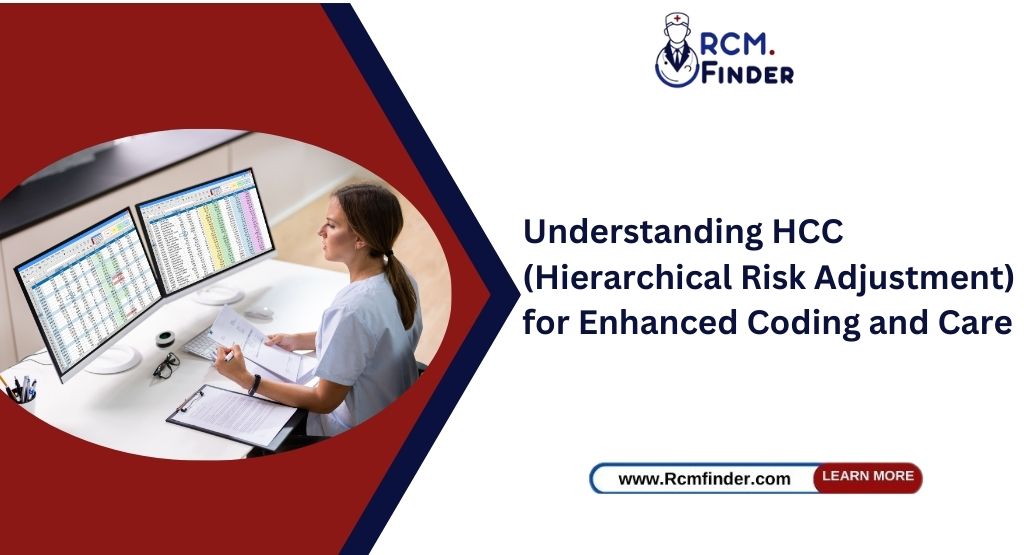
In today’s healthcare landscape, accurate coding is crucial not only for maximizing reimbursement but also for delivering high-quality patient care. One of the key methodologies employed is Hierarchical Risk Adjustment (HCC), which plays a critical role in how healthcare providers are compensated. This comprehensive guide delves into HCC, its importance, coding strategies, and best practices […]
What HCC coding means, how risk scores connect to Medicare Advantage payment, what auditors check in a record, and the documentation habits that keep diagnoses defensible.
Which ICD-10-CM code goes on a follow-up visit after treatment is finished? Z09, Z08 and the aftercare codes compared, plus how hospital follow-up visits are billed.
In the complicated world of healthcare billing, the Explanation of Benefits (EOB) document plays a key role in managing revenue. This guide will explain what EOBs are, why they matter for healthcare providers, and share best practices for using them effectively to improve billing accuracy and financial results. What is an EOB? Definition and Purpose […]
Medical billing is a complex process that requires precise coding to ensure healthcare providers receive the payments they deserve. One critical aspect of this process is the entity code. In this article, we will explore what entity codes are, their significance in medical billing, how to avoid common errors associated with them, and the impact […]
An entity code rejection means the payer’s acknowledgment pointed at one party on your claim: the billing provider, the subscriber or another. Here is how to read it, fix it and stop it coming back.
We use cookies to understand how our site is used and to measure our advertising. You can accept or reject non-essential cookies. See our Privacy Policy.