
Urgent care revenue cycle management is the full path from a walk-in check-in to the final payment posting, with a clock at every step. Medicare allows one calendar year to file, but the checkpoints that move cash are internal ones: eligibility at the desk, charges closed before the patient leaves and claims sent within a day or two.
A scheduled specialty practice has days to prepare for a visit. An urgent care has minutes. Registration, eligibility, collection, charting and charge capture all happen on the same day, usually while the waiting room is full, and any gap travels down the line into the claim.
This guide lays the cycle out as a timeline, from the door to the posted payment. It names a checkpoint for each stage, sets the published clocks beside them and shows who can own each step. It does not repeat the list of common errors, which sits in the urgent care billing mistakes guide, or the code detail in the urgent care billing and coding guide.
Key takeaways
- The cycle starts at the door: with no appointment, registration and eligibility share a few minutes with the waiting room.
- Medicare’s filing limit is one calendar year from the date of service, so internal checkpoints do the real work.
- The earliest a Medicare contractor releases a clean claim for payment is 14 days after submission, so follow-up before then wastes effort.
- Electronic eligibility and claim status transactions cost far less than manual ones in the 2024 CAQH Index.
- Each stage needs one named owner and one measure, such as charge lag or first-pass acceptance.
What is urgent care revenue cycle management, and where does the clock start?
It is every step that turns a walk-in visit into posted cash, and the clock starts at the door. CMS defines place of service code 20 as a location, distinct from a hospital emergency room, an office or a clinic, that diagnoses and treats illness or injury for unscheduled, walk-in patients, effective January 1, 2003 (CMS place of service code set). Unscheduled is the operative word: there is no pre-visit window for verifying coverage or collecting, so the work is compressed into the visit.
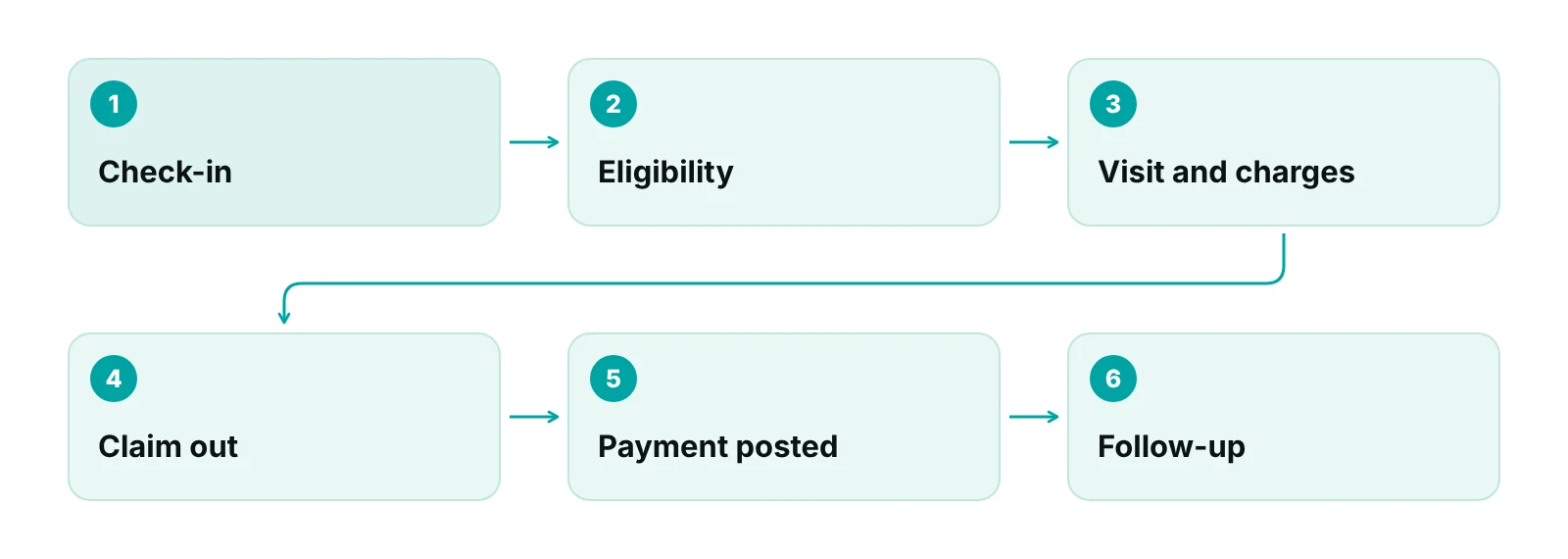
Table 1 sets a checkpoint against each stage. The targets are editorial suggestions to adapt from the clinic’s own data, not rules; the published clocks that sit behind them follow in Table 2.
| Stage | Suggested internal target | What must be true | Owner |
|---|---|---|---|
| Registration | At check-in | Photo ID, insurance card images, contact details and consents captured | Front desk |
| Eligibility | Before the patient is roomed | Active coverage confirmed; plan, copay and self-pay status noted | Front desk or remote support |
| Point-of-service collection | Before the patient leaves | Copay or self-pay amount requested and recorded | Front desk |
| Charges captured | Same day, before the shift ends | Visit level, procedures, X-ray, lab and supplies on the charge | Provider and coder |
| Claim scrubbed and sent | Within one to two business days | Required fields complete, diagnosis and place of service present | Billing team |
| Acceptance check | Within two business days of sending | Clearinghouse or payer acceptance confirmed; rejections reworked | Billing team |
| Payment posting | Same or next business day after remittance | Payments, adjustments and denial reasons posted and coded | Billing team |
| Follow-up trigger | Day 30 after submission with no payment | Status checked; denial reworked or appeal started | Billing team |
Source: editorial framework. Published clocks that inform the targets are in Table 2.
What has to happen in the first minutes of a walk-in visit?
Registration has to capture identity, coverage and consent, and eligibility has to be checked while the patient is still at the desk. HIPAA names the electronic transactions for this: the 270/271 pair for eligibility and benefit verification, the 837 for claims, the 276/277 pair for claim status and the 835 for remittance, all on ASC X12 version 5010, with federally mandated operating rules for eligibility, claim status and remittance (CMS adopted standards). A front desk that checks eligibility through the 270/271 transaction avoids a phone call per patient.
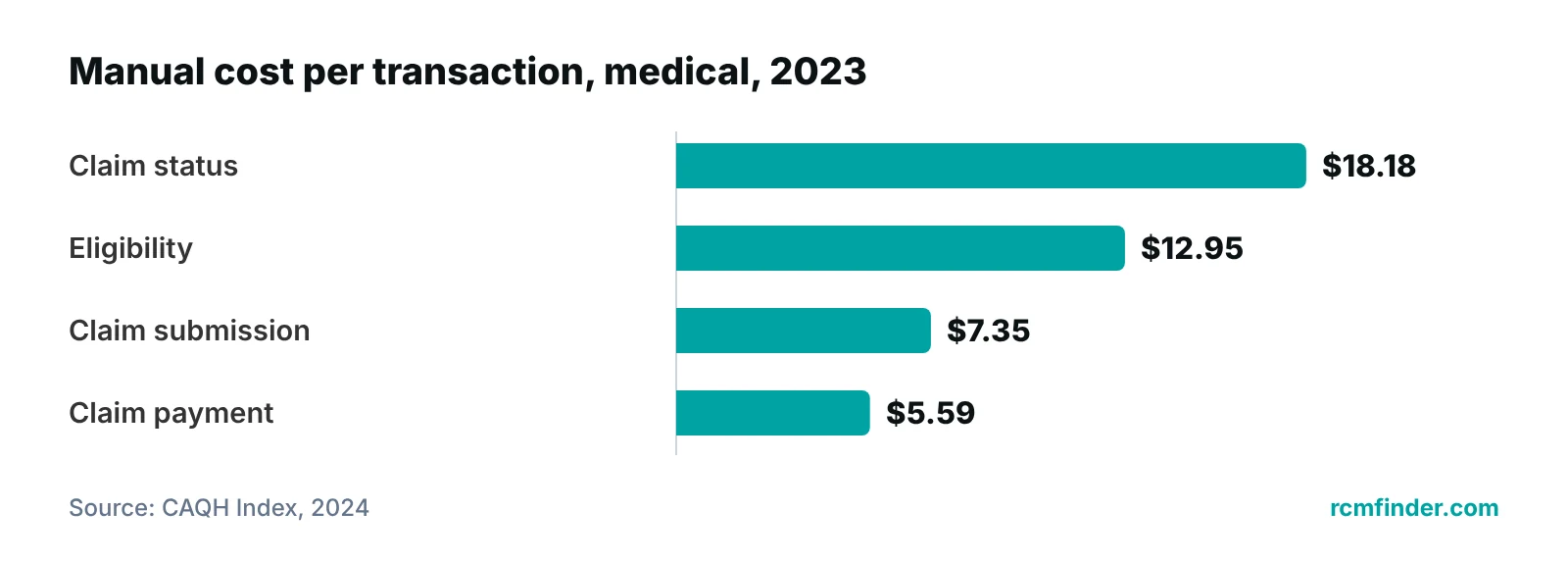
The cost gap is wide. The 2024 CAQH Index, which reports calendar 2023 data, puts the industry cost of a manual eligibility and benefit verification at $12.95 against $2.04 when fully electronic, and a manual claim status inquiry at $18.18 against $3.68 (CAQH). Those are industry averages across plans and providers, not a clinic’s own cost, but the direction is clear. Where eligibility is still done by phone, a remote front-desk team is one way to move it ahead of the visit; see the guide to insurance verification.
Three registration fields drive most of the downstream work: the payer and member identifier, demographics that match the card exactly, and the date and time of service. A name on the card that differs from the name in the chart is the kind of defect that keeps a claim from being clean under the definition in Table 2, and it costs seconds to catch at the desk and days to fix later.
What about patients without insurance?
Self-pay is common enough that the front desk needs a script. Under the No Surprises Act, good faith estimates are required for uninsured or self-pay individuals for items or services scheduled or requested on or after January 1, 2022. HHS’s FAQs, dated December 1, 2021, say urgent, emergent and trauma care is generally not included because it is not typically scheduled in advance, and they do not specifically address walk-ins (HHS FAQs). The federal estimate may not apply to a walk-in, but a posted self-pay price list and a clear collection step at the desk keep the balance from becoming a statement later. State requirements may differ.
What has to be captured before the patient leaves?
The chart has to be closed and every billable item has to be on the charge, ideally the same day. Office and outpatient E/M levels (99202 to 99215) have been chosen by medical decision making or total time since January 1, 2021, with history and exam required only as medically appropriate, according to a Journal of Urgent Care Medicine trade article from January 2020 (JUCM). Level selection is therefore a coding step that needs the note finished, not a front-desk step.
Payers differ on how a visit is paid. The Urgent Care Association’s 2023 white paper notes a trend toward global fixed-amount-per-visit rates, with S9083 as an example (Urgent Care Association), so the charge may need to be built differently by payer. The urgent care billing and coding guide covers those rules, and the EHR and urgent care billing guide covers what the software layer should do.
Charge lag is the first number to watch
Charge lag is the time from the date of service to the date the charge is posted. It is measured easily from the system’s own timestamps, and every day added to it is a day added to the cycle before the claim can even be scrubbed.
How fast must the claim go out, and which clocks are fixed?
Medicare’s limit is one calendar year from the date of service. The regulation says the claim must be filed no later than the close of the period ending one calendar year after the date of service, with narrow exceptions for administrative error and retroactive entitlement (42 CFR 424.44), and the CMS manual says the receipt date is what is tested (CMS). Commercial payers set their own limits in their contracts, and many are shorter, so each contract needs to be read.
| Clock | What the source says | Practical meaning |
|---|---|---|
| Medicare filing limit | Claim filed by the close of the period ending one calendar year after the date of service (42 CFR 424.44) | Outer wall only; internal targets should be far inside it |
| Untimely filing denial | Denied if the receipt date exceeds 12 months or one calendar year from the date services were furnished (CMS manual, section 70.4) | Receipt date counts, not the day the claim was keyed |
| Exceptions | Administrative error, retroactive entitlement and related cases | Not a plan; an exception needs proof and time |
| Earliest payment | A Medicare contractor states the soonest it releases a claim is 14 days after submission | Chasing before day 14 adds no information |
| Processing window | Up to 30 days to process clean claims without interest, per CMS Pub. 100-04, chapter 1, section 80.2.1.1 | Day 30 is a sensible first escalation point |
| Clean claim | No defect that would inhibit timely payment; not clean if records were requested | Completeness at entry decides speed |
Source: eCFR, 42 CFR 424.44; CMS Transmittal R12909CP; CGS Medicare, payment timeframes page (Part A contractor).
A claim that meets the ‘clean’ test also has to carry the required data. The Medicare data element guide treats place of service as required on every claim, allows up to 12 diagnosis codes, and returns claims with missing or invalid required items as unprocessable (First Coast Service Options). A pre-submission check for those fields is what claim scrubbing does, and it is the cheapest place in the cycle to stop a rejection.
What happens after the claim leaves?
Four things: acceptance, status, posting and follow-up. Each has an electronic transaction, and each is where time disappears if it is done by hand.
- Acceptance: confirm the claim was accepted and rework rejections the same day they appear.
- Status: check claims with no response at the point set in Table 1 using the 276/277 transaction rather than a phone call.
- Posting: post the 835 remittance, code each adjustment and send denial reasons to a work queue, the approach described in the guide to denial management.
- Follow-up: keep an aging view and a named owner for anything past the trigger, working the oldest and largest balances first.
| Checkpoint | At the clinic | Remote support or billing partner |
|---|---|---|
| Eligibility checks | Front desk at check-in | Remote front-desk staff run checks before or at arrival |
| Charge review | Provider and coder close the chart | Coding support reviews levels and missing charges |
| Claim scrub and send | Billing lead | Billing team scrubs and submits |
| Payment posting | Office manager | Billing team posts remittances and flags underpayments |
| Denials and A/R follow-up | Billing lead | Billing team works queues by age and payer |
| Patient statements | Front desk | Billing team sends and tracks balances |
Source: editorial handoff map; the split depends on each clinic’s staffing.
Whichever split a clinic chooses, a partner that handles protected information needs a written agreement first. HHS’s sample provisions describe what such a business associate agreement covers: permitted uses, safeguards, breach reporting, subcontractors, return or destruction of information and termination (HHS, January 25, 2013). Access control and audit controls under the HIPAA Security Rule’s technical safeguards are the questions to put to any system that touches claims (HHS).
Which measures show where the cycle is slow?
Five measures cover the cycle, and each maps to one owner. None needs a benchmark to be useful; the trend inside the clinic is the signal.
- Charge lag: date of service to charge posted.
- First-pass acceptance: share of claims accepted without rework.
- Point-of-service collection: share of due copays and self-pay amounts collected at the desk.
- Days in A/R: average age of open claims, measured from the date of service.
- Denial rate by reason: grouped by cause, so the fix lands at the right desk.
Weekly dashboards that show these measures make the owner of each one visible, and a baseline month taken before any change makes the later trend believable.
“A cycle is only as fast as its slowest handoff. Name the owner of each handoff before buying anything to speed it up.”
— Awais Afzal, Healthcare Operations & Data Analyst
When does outside support make sense?
When a checkpoint is missed repeatedly for lack of hands, not lack of knowledge. RCM Finder’s end-to-end revenue cycle management service covers billing, coding support, claim scrubbing, denial management and A/R follow-up, and the Virtual Medical Assistant service provides remote front-desk staff for eligibility, intake and prior authorizations, working inside the clinic’s existing EHR and on the clinic’s own time zone. The trade-offs between in-house, outsourced and hybrid models are in the guide on outsourcing urgent care billing.
See where the cycle is slowing down
Request a free practice audit and RCM Finder will map the clinic's checkpoints against Table 1 and show where the handoffs are weakest. The audit is free.
Our recommendations
- Draw the cycle as a timeline. List each stage with its owner and target, using Table 1 as a starting point, and adjust the targets after one month of the clinic’s own data.
- Run eligibility electronically at check-in. Move phone-based checks to the 270/271 transaction and keep phone calls for exceptions.
- Close charts and charges the same day. Measure charge lag weekly and review any chart still open at shift end.
- Set escalation points from the published clocks. Use day 14 as the earliest status check and day 30 as the first escalation, and keep every payer contract’s filing limit on a one-page sheet.
- Post payments and denials by reason. Code every adjustment so patterns reach the person who can fix the cause.
- Sign the right agreement before sharing data. Put a business associate agreement in place before any vendor or remote team sees patient information.
Bottom line
Urgent care revenue cycle management comes down to a short list of timed handoffs: coverage checked at the desk, charges closed the same day, claims clean and sent within a day or two, and a defined point at which a silent claim is chased. RCM Finder’s revenue cycle management service page shows how those steps are run for practices, and the guides to urgent care practice management software, urgent care marketing, urgent care SEO and urgent care digital marketing cover the systems and the front-end demand that feed this cycle.
Frequently asked questions
What is urgent care revenue cycle management?
It is the full chain from walk-in registration and eligibility through charge capture, coding, claim submission, payment posting and follow-up. Because visits are unscheduled, the front-end steps happen in minutes, so errors made at the desk surface later as denials or slow payments.
How long does an urgent care have to file a Medicare claim?
One calendar year from the date of service, under 42 CFR 424.44, with narrow exceptions such as administrative error. Commercial payers set their own limits by contract and many are shorter, so each contract should be checked and the limits kept on a reference sheet.
When does Medicare pay a clean claim?
A Medicare contractor’s guidance says the soonest it releases a claim for payment is 14 days after submission, and it has up to 30 days to process a clean claim without interest. Follow up from day 30, not before day 14. Confirm the rule for the contractor handling Part B claims.
Do urgent cares have to give uninsured patients a good faith estimate?
HHS’s 2021 FAQs say urgent, emergent and trauma care is generally excluded because it is not typically scheduled in advance, and they do not address walk-ins directly. A posted self-pay price list and a clear collection step are still sensible, and state rules may add requirements.
Who should own each stage of the urgent care revenue cycle?
Each stage needs one named owner: the front desk for registration and collection, the provider and coder for charts and charges, and the billing lead for claims, posting and follow-up. The owner can be an employee, a remote team or a billing partner, but the name should be on the checkpoint sheet.
Which numbers should an urgent care track first?
Charge lag, first-pass acceptance, point-of-service collection, days in A/R and denial rate by reason. Each maps to one stage and one owner. The clinic’s own trend matters more than an outside benchmark, so record a baseline month before changing anything.
Get your free practice audit
Tell us about your practice. We will contact you using the details you give.
- A review of your recent claims, denials and A/R aging
- Where your front desk and prior authorizations slow payment
- A prioritized fix list you keep, whether or not you hire us
Pricing is quoted after the audit, based on your volume and the services you choose. Prefer to talk? Call +1 (302) 556-2288.
Sources
- CMS Place of Service Code Set — CMS / HHS (2024)
- Adopted Standards and Operating Rules — CMS (2026)
- Good Faith Estimates for Uninsured or Self-Pay Individuals FAQs, Part 1 — HHS / CMS (2021)
- 42 CFR 424.44 Time limits for filing claims — eCFR (2026)
- Transmittal R12909CP, Medicare Claims Processing Manual — CMS (2026)
- Payment timeframes — CGS Medicare (Part A contractor) (2026)
- CMS-1500 (02/12) data element requirements — First Coast Service Options (Medicare) (2026)
- 2024 CAQH Index — CAQH (2024)
- Already Looking Forward to 2021 and Smoother Sailing with E/M Coding — Journal of Urgent Care Medicine (Monte Sandler) (2020)
- 2023 Urgent Care Industry White Paper — Urgent Care Association (2023)
- Sample Business Associate Agreement Provisions — HHS Office for Civil Rights (2013)
- Security Standards: Technical Safeguards — HHS / CMS HIPAA Security Series (2007)
Disclaimer: This article is educational and is not legal, coding or compliance advice. Payer rules, Medicare contractor policies and state requirements differ and change. Confirm current rules with your payers, your Medicare contractor and qualified counsel before relying on any timeline here.
